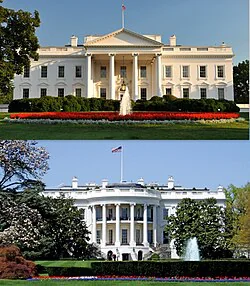
Stepping onto the sunlit grounds of the White House feels like entering a living history book. This iconic neoclassical mansion at 1600 Pennsylvania Avenue has witnessed more than two centuries of American triumph, turmoil, and transformation. It's not just a home; it's a global symbol of the presidency, a working office, a museum of American craftsmanship, and a backdrop for history's biggest moments.
Why is it famous? Well, every day, millions of people see its image on news broadcasts, movies, and postcards. But there's nothing like standing in front of that familiar columned portico, hearing the crunch of gravel under your feet, and realizing: presidents have walked this exact path. From state dinners under crystal chandeliers to tense moments in the Situation Room, these walls could tell a thousand stories. And for the lucky visitor who gets inside, it's an unforgettable encounter with the heart of American power.
The history of the White House is as rich as the D.C. soil it stands on. President George Washington chose the site in 1791, but he's the only president who never lived there. The design came from Irish-born architect James Hoban, whose neoclassical vision won a design competition. Construction began in 1792, and it took eight years to finish, using sandstone painted white. John Adams moved in with his wife Abigail in November 1800, when the building was still damp and unfinished. Abigail famously used the East Room to hang laundry.
Then came the War of 1812. British troops set the White House ablaze in August 1814, gutting the interior and leaving only the exterior shell. Rebuilding started almost immediately, and James Monroe moved into the restored mansion in 1817. Over the decades, the mansion grew. Thomas Jefferson added the East and West Terraces. In 1902, Theodore Roosevelt insisted on a major renovation that created the West Wing, giving the Oval Office its own space separate from the family quarters. Later, Harry Truman oversaw a massive interior reinforcement and rebuild from 1948 to 1952, adding a steel frame while retaining the historic walls. Today, the White House contains 132 rooms, 35 bathrooms, and 43,000 square feet of floor space, plus a bowling alley, a movie theater, and a tennis court.
Getting inside the White House is special, not just because of the history, but because it's harder than scoring a ticket to the hottest show in town. Public tours are self-guided and completely free, but you can't just show up. For U.S. citizens, you need to submit a request through a member of Congress; for international visitors, you'll go through your home country's embassy in Washington. Requests should be made up to three months in advance, and tours are filled on a first-come, first-served basis. Security screening is rigorous, so bring only a small phone and camera—no bags, food, or large purses.
Once you're through the gates, the tour takes about 30 to 45 minutes, depending on how slowly you linger. You'll follow a winding path through the stately public rooms on the State Floor. One of the first rooms you'll enter is the grand East Room, where chandeliers glitter and a grand piano stands at the ready. It's been the site of weddings, funerals, and presidential press conferences. Next, you might pass through the Green Room, an elegant parlor used for teas and receptions, and the Red Room, with its crimson silk walls. Don't miss the Blue Room, the oval-shaped centerpiece of the house where the president often greets foreign dignitaries.
You'll also see the State Dining Room, set with fine china and crystal, and the Vermeil Room, which displays a collection of gilt silver. The biggest treat? The portraits. Every room features works from the White House's permanent art collection, including paintings by John Singer Sargent and portraits of past presidents and first ladies. Along the way, you'll catch glimpses of the famous Rose Garden just outside a window, and if you're lucky, you might spot the First Family's residence on the floor above.
As for photo spots, the front of the White House is the classic shot. Stand outside the North Fence on Pennsylvania Avenue for the iconic view of the portico and main entrance. But the South Lawn, visible from many of the tour windows, is equally photogenic with its sweeping green grass and the Washington Monument peeking in the distance. For a less crowded perspective, walk to the side near the Eisenhower Executive Office Building; the ornate French Second Empire architecture makes a beautiful backdrop.
Hidden gems might not be marked on your map. Look for the Theodore Roosevelt entrance, a passage lined with murals, or the small, wood-paneled study called the Treaty Room. And if you're sharp-eyed, you'll spot the glowing tiara of Dolley Madison in her famous portrait in the Vermeil Room, one of the few hints of the building's colorful past. One little-known fact: the White House was not officially called the White House until Theodore Roosevelt put that name on the stationery in 1901. Before then, it was known as the President's House or the Executive Mansion.
Keep in mind that visits are only possible while the president is in town; if the First Family takes off for a weekend retreat, tours may be cancelled at the last minute. But when it all works out, you'll leave with far more than photographs. You'll walk away with the quiet thrill of having touched a piece of living history, a place where power, tradition, and human stories converge under that iconic white facade. The White House isn't just a building—it's the beating heart of a nation, and for a few golden minutes, you're standing right inside it.